

Before you change anything, look at where the liquid is escaping. A pod or tank has three weak points, and each one points to a different cause.
If your kit is also gurgling, misfiring or tasting burnt, work through our guide to 8 common vape problems alongside this one. Leaking rarely turns up on its own.
Use this table to match what you’re seeing to the likely cause and the quickest fix. Most people find their answer in the first three rows.
| Cause | What you notice | Fix |
|---|---|---|
| 1. Overfilling | Leaks straight after a refill, gurgling on the first puff | Fill to the max line and leave an air gap |
| 2. Worn or loose coil | Leak gets worse over days, muted flavour, gurgling | Reseat the coil; replace it if it’s over a week old |
| 3. Damaged seals | Slow seep at the base or threads, sticky battery contacts | Inspect O-rings, fit the spares from the box |
| 4. Liquid too thin | Leaks from airflow even with a fresh coil | Match PG/VG ratio to the coil |
| 5. Airflow too wide | Wet airflow slots, loose draw, spitback | Close the airflow a notch or two |
| 6. Heat and pressure | Leaks in a hot car, pocket or on a flight | Keep it cool, upright and not brim-full |
| 7. Poor reassembly | Leak starts right after cleaning or a coil change | Strip down and rebuild, checking every thread |
| 8. Low-quality liquid | Inconsistent thickness, leaks with one bottle but not another | Switch to a UK-made, TPD-compliant e-liquid |
1. Overfilling the tank or pod. When there’s no air gap left inside the chamber, pressure builds up quickly. Every pod and tank is designed with a little empty space at the top so the liquid has somewhere to expand when the coil heats it. Fill past that line and the extra pressure pushes liquid down through the coil and out of the airflow. The fix is boring but it works: fill to the max mark, never to the brim, and put the mouthpiece or fill bung back straight away. Our guide on how to fill a pod kit correctly walks through it step by step.
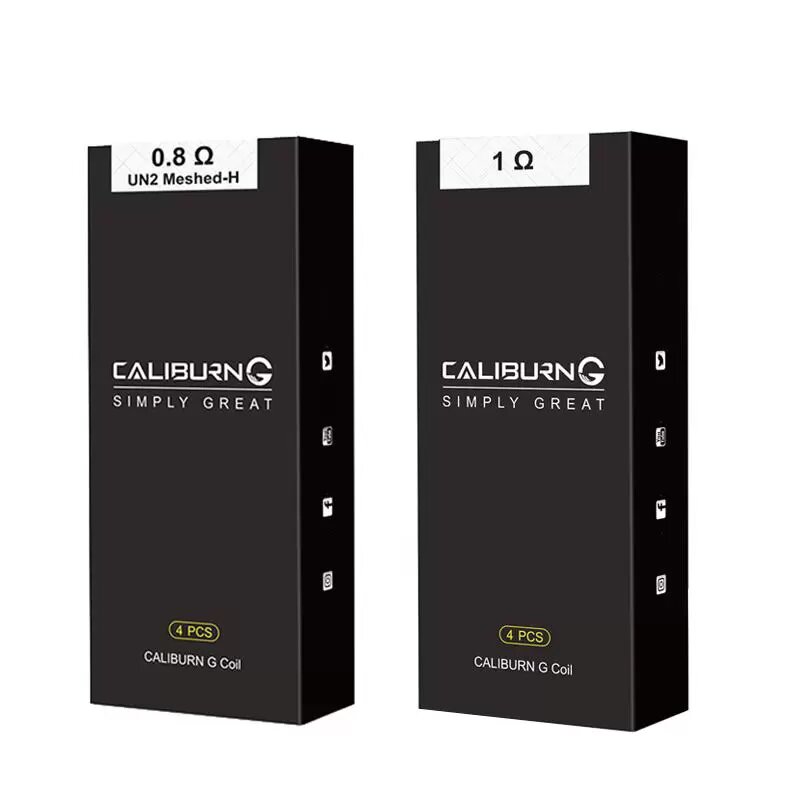
2. Coil wear or incorrect placement. The cotton in a coil is the barrier between the liquid and the air path. A loose coil creates small gaps, and an old coil loses absorption efficiency, so the cotton no longer holds liquid back and it drips through. Push-fit coils, like those in many pod kits, need to click fully home; screw-in coils need to be snug but not cranked. If reseating doesn’t stop the drip, fit a fresh one from our replacement coils range. Most coils should be replaced every one to two weeks depending on how much you vape and how sweet your liquid is.
3. Damaged seals and loose connections. Every tank has O-rings at the base, the top cap and around the coil; every pod has a silicone gasket where it meets the battery. Even a tiny gap is enough for liquid to escape slowly. Seals dry out, get nicked by a fingernail or simply go missing during a clean. Check them each time you change a coil and swap in the spares that came in the box. On a tank, also make sure the glass sits flush and the 510 connection is clean and dry.
4. Liquid thickness and flow behaviour. Thinner liquids move faster and can pass through coil openings too easily. This is the cause people miss most often. A high-PG 10ml liquid is perfect for a tight 1.0Ω pod coil, but drop it into a sub-ohm mesh coil with big wicking ports and it will pour straight through. The reverse is just as bad: thick 70/30 shortfill in a pod kit won’t wick fast enough and burns the coil. If you’re not sure which kind you should be using, read shortfill vs 10ml e-liquid.
5. Airflow set too wide. Airflow does more than change how the draw feels. A restricted airflow keeps a slight vacuum in the chamber that holds liquid in the cotton. If it’s too open, it reduces resistance and can allow liquid to move. If you’ve got wet airflow slots and a very loose draw, close the ring a notch or two and see if the leak stops. Our guide to MTL vs DTL vaping explains which airflow setting matches which coil.
6. Temperature and pressure changes. Warm environments make liquid thinner, so it moves through the wick more easily; cold makes it thicker, so the coil struggles to draw it up and can dry-burn instead. A device left on a sunny dashboard or in a tight jeans pocket all afternoon will often leak even though nothing is wrong with it. Altitude does the same thing: the air trapped in a full tank expands as cabin pressure drops, which is why so many people arrive after a flight with a wet bag. Vape with the tank half full on travel days, keep it upright, and don’t leave it near a radiator or in direct sunlight. The same rules keep your bottles in good shape too; see our e-liquid storage tips.
7. Incorrect reassembly after refilling. If parts are not aligned correctly, small gaps form. Cross-threading a top cap by a fraction of a turn, leaving the coil half-seated, or pinching an O-ring under the glass are all easy to do in a hurry. The tell-tale sign is a leak that starts immediately after a clean or a coil change on a device that was fine before. Strip it down and rebuild it slowly, screwing each part until it stops rather than forcing it.
8. Low-quality e-liquid. Lower-quality liquids often have inconsistent thickness, which leads to unstable flow. If the same pod leaks with one bottle and stays dry with another, the liquid is the variable. Stick to UK-made, TPD-compliant brands with a stated PG/VG ratio on the label. Our 10ml e-liquids and nic salts are almost all 50/50 blends made for pods, and the shortfills are 70/30 for sub-ohm coils.
If you can’t tell which cause you’ve got, this reset deals with all eight at once. It takes about fifteen minutes including the soak.
A surprising number of leaking devices are doing exactly what they’re built to do with the wrong liquid in them. The coil’s resistance tells you what it wants.
| Coil | Typical kit | Liquid that stays put | Liquid that leaks |
|---|---|---|---|
| 0.8Ω and above | Pod kits, MTL tanks | 50/50 10ml, nic salts | Very high PG liquids in loose-fitting coils |
| 0.4Ω to below 0.8Ω | Restricted DTL pods, all-in-one kits | 50/50 or 60/40 | Thin 50/50 at high wattage |
| Below 0.4Ω | Sub-ohm tanks, mods | 70/30 or 80/20 shortfill | Any 50/50 10ml, especially nic salt |
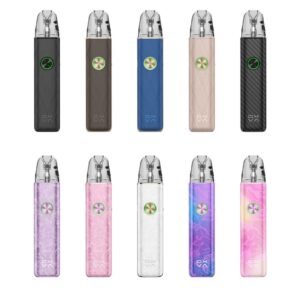
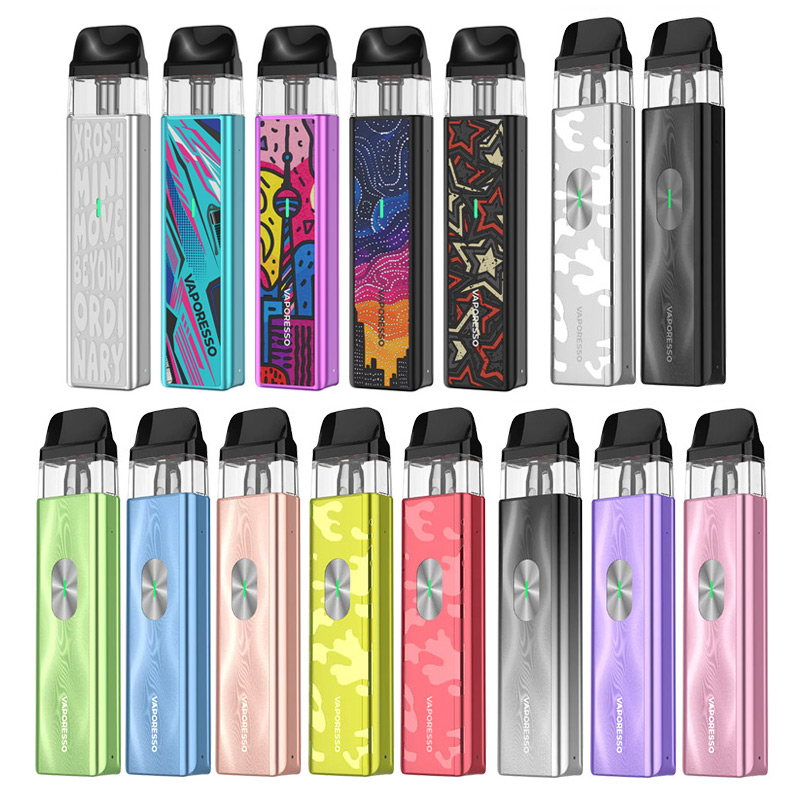
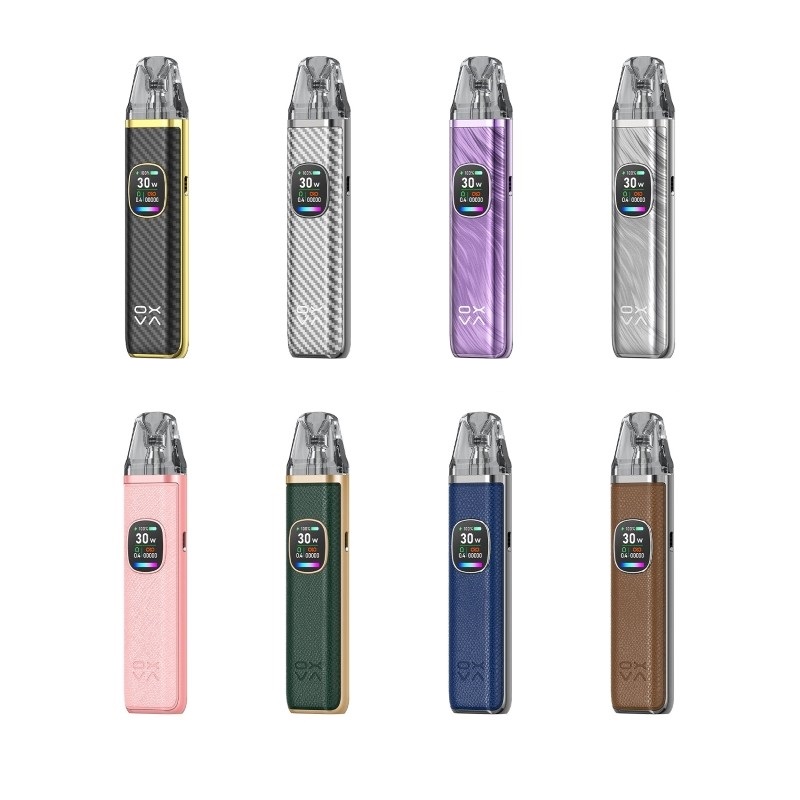
Pod kits with tight wicking are among the least leak-prone devices we sell, which is why so many ex-smokers settle on one. The Vaporesso Xros 4 Mini uses 2ml refillable pods with adjustable airflow and a top fill port under the mouthpiece, and the Oxva Xlim Pro 2 top fills under the mouthpiece, so the pod never has to come off the device. Both are happiest on 50/50 liquid.
If you’re on a tank, buy coils by resistance and treat them as consumables. Mouth-to-lung favourites like the Aspire Nautilus coils and the Uwell Caliburn G2 coils are cheap enough that changing one is always quicker than chasing a leak for a week. Browse vape tanks if you want a fresh start with new seals and glass.
If you’d rather never fill anything, a prefilled pod kit removes overfilling, reassembly and liquid choice from the list entirely. You click in a sealed prefilled pod into the battery, vape it, then bin the empty pod and click in a fresh one. The battery is rechargeable and you keep it. Since disposables were banned in the UK on 1 June 2025, these are the legal grab-and-go option.
Store it upright. A pod lying on its side overnight lets liquid pool against the airflow holes. Stand it up on a desk or bedside table, and if it has to go in a bag, keep it in a pocket where it stays vertical.
Change coils before they fail, not after. Flavour drops off a day or two before a coil starts leaking. Treat muted flavour as the signal and you’ll rarely see a leak at all.
Prime every new coil. Drop a little liquid onto the exposed cotton, fill the tank and leave it five to ten minutes. Dry cotton burns on the first puff and a burnt coil is a leaking coil within days.
Vape at the right power. Every coil has a wattage range printed on it. Under-powering leaves liquid unvaporised in the chamber, where it collects and leaks. Over-powering burns the cotton.
Keep it cool and don’t shake it. Heat thins the liquid; rough handling pushes it through the wick. Both undo an otherwise perfect set-up. Most of these slip-ups are covered in our list of common vaping mistakes beginners make, and every replacement coil or bottle you buy earns 1.8 reward points per £1 spent.
Free UK delivery over £15, 1.8 reward points on every £1 and 20,000+ five-star reviews. New here? Register at checkout for 10% off your first order.
The coil chamber has flooded. Overfilling, a loose or worn coil, airflow set too wide or liquid that’s too thin for the coil all upset the pressure balance that normally holds liquid in the cotton. Empty it, reseat or replace the coil and refill to the line.
Usually it isn’t seated fully, or it was fired before the cotton had soaked. Push it home until it clicks or stops, prime it, wait five to ten minutes and start on short puffs.
Most coils should be replaced every one to two weeks depending on usage. Sweet dessert flavours and heavy use shorten that; light use of a plain fruit or tobacco can stretch it.
No. Vapour cools and condenses in the drip tip on every puff, and that’s normal. Wipe it with a tissue. Hot liquid spitting into your mouth is different and means a flooded coil.
Not in most of them. Pod coils of 0.8Ω and above want 50/50 liquid; thick 70/30 shortfill wicks too slowly and burns the coil. Some pods that take coils around 0.6Ω or lower will handle a 60/40, but check the coil rating first.
The air trapped in the tank expands as cabin pressure drops and pushes liquid out through the coil. Fly with the tank half empty or fully empty, keep the device upright in your hand luggage, and refill after landing.