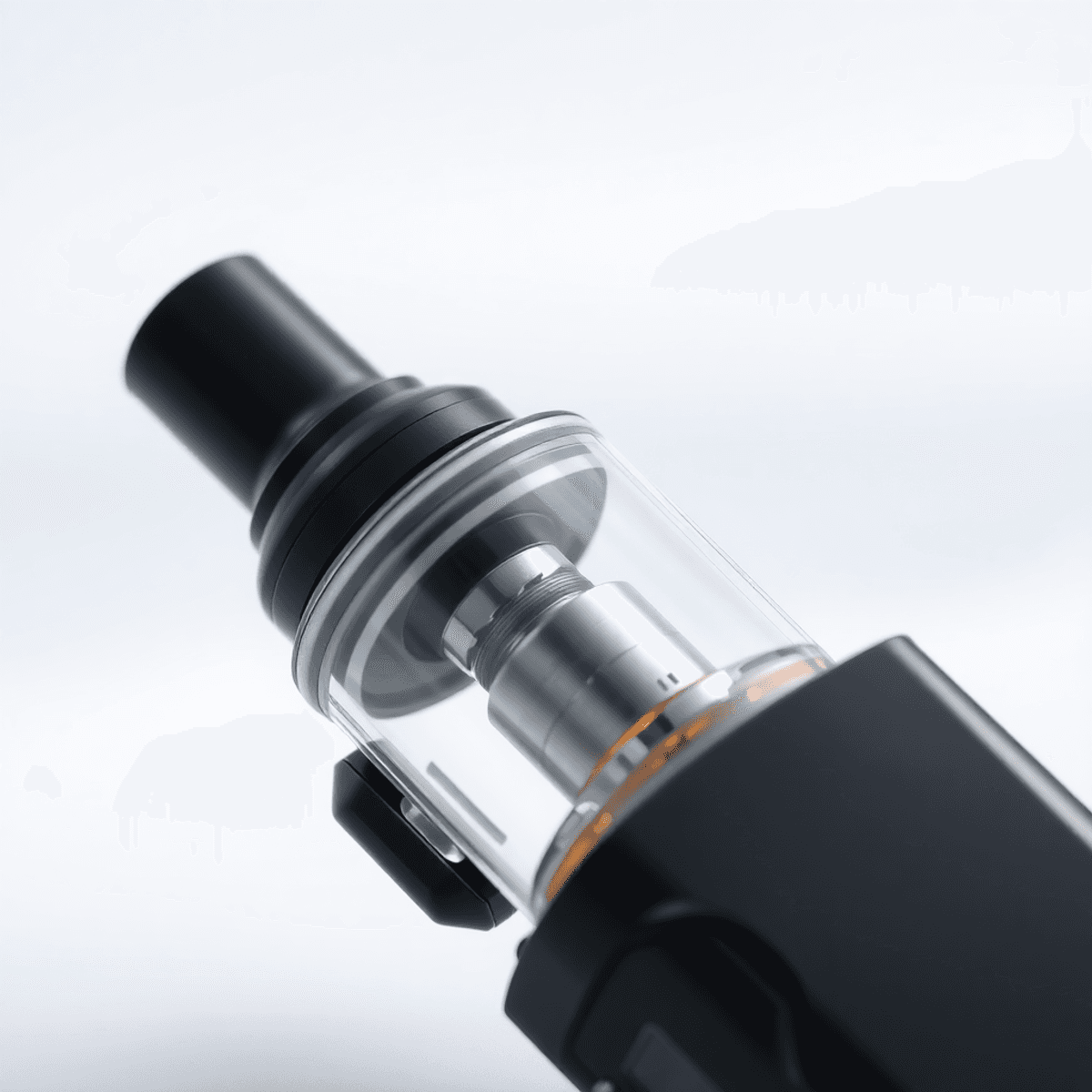
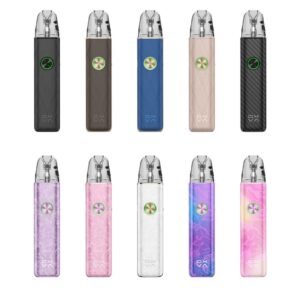


With daily use, where a pod kit or mod lands in its lifespan depends on how hard you use it, how you charge it and how well it was made in the first place. A well-built kit from a brand like Vaporesso or Innokin that is charged sensibly will sit at the top of the range. A budget kit left on charge every night and carried loose in a pocket with keys will not.
The device is really a stack of parts with different lifespans, and most “my vape is broken” moments are one of the short-lived parts asking to be replaced.
| Part | Typical life | What shortens it |
|---|---|---|
| Coil | 1 to 3 weeks | Sweet liquids, high wattage, running dry |
| Pod (with built-in coil) | 1 to 3 weeks | Same as coil, plus cracked plastic |
| Seals and O-rings | 3 to 6 months | Heat, over-tightening, harsh cleaning |
| Battery | 300 to 500 charge cycles | Overnight charging, heat, running flat |
| Whole device | 6 to 18 months | Everything above, plus drops and pocket wear |
A charge cycle is one full drain and refill of the battery, so two half-charges count as one cycle. At one cycle a day that works out at ten to sixteen months, so the battery is usually what sets the life of the whole device. A kit that is new should run eight to twelve hours of moderate use per charge. By the end of its life the same kit may manage two to four.
1. Battery life has collapsed. The device that used to last a full day now dies by lunchtime, takes noticeably longer to charge, never seems to reach full, or gives weak hits one minute and normal ones the next. Inconsistent power is the battery struggling to hold voltage under load.
2. Burnt taste on a brand new coil. A worn coil tastes burnt; that is normal and a new coil fixes it. A new, properly primed coil that tastes burnt within a day means the device is delivering the wrong power, the airflow path is blocked with residue, or the pod seat is damaged so the coil is not sitting where it should. If fresh consumables do not cure a burnt taste, stop buying consumables.
3. Persistent leaking. Every kit leaks occasionally. A kit that leaks from a fresh pod, on a level surface, with the airflow set correctly, has worn seals around the coil housing or fill port, cracked tank glass, or damaged threading on the connection. Seals can sometimes be replaced; threading cannot. Our guide on how to stop e-liquid leaks rules out the fixable causes first.
4. Misfiring, auto-firing or error messages. A device that fails to fire when you press the button, fires when you do not, throws “check atomiser” on a coil you know is good, or drops its temperature-control readings is showing chipset or connection wear. Auto-firing in particular is a reason to stop using a kit that day. Older kits also lack the short-circuit cut-off, overheat protection and ten-second puff limit that current regulated chipsets include.
5. You cannot get the parts any more. Manufacturers discontinue coil and pod lines all the time. When the coils for your kit are only available from one overseas seller at twice the price, with a three-week wait, or as an unbranded copy that tastes wrong, the kit has been retired for you. Check the replacement coil range now and again; if your coil family has disappeared, plan the upgrade before the last pack runs out.
For faults that are not on this list, run through 8 common vape problems and how to fix them before you spend anything.
Most of the money wasted on new kits is spent on problems a new coil would have solved. Before replacing a device, work through the parts in order of cost.
| Symptom | Try first | Verdict |
|---|---|---|
| Burnt or weak flavour | New coil or pod, primed properly | Repair |
| Weak or intermittent firing | Clean the contacts on pod and battery | Repair |
| Leaking from one pod | New pod, check the bung and coil seating | Repair |
| Leaking from every pod | Inspect seals and threading | Replace if threading is worn |
| Will not charge | Different cable, clean the port with a dry brush | Repair, unless the port is loose |
| Dies in hours, auto-fires, no parts | Nothing | Replace |
The one exception is a mod that runs on removable 18650 or 21700 cells. There, a tired battery is a new pair of cells rather than a new device, and a good box mod can outlast several tanks.
Sometimes the device is fine and you are the thing that moved on. Common reasons to upgrade a working kit:
If you do upgrade, buy for the next twelve months rather than the current one. Kits like the OXVA XLIM Pro 2 and Vaporesso XROS 5 Mini pair a bigger battery with widely stocked pod ranges, and a kit whose pods are sold everywhere is a kit whose parts will still exist next year. Our best vape kits guide and how to choose the right vape kit cover the current range.
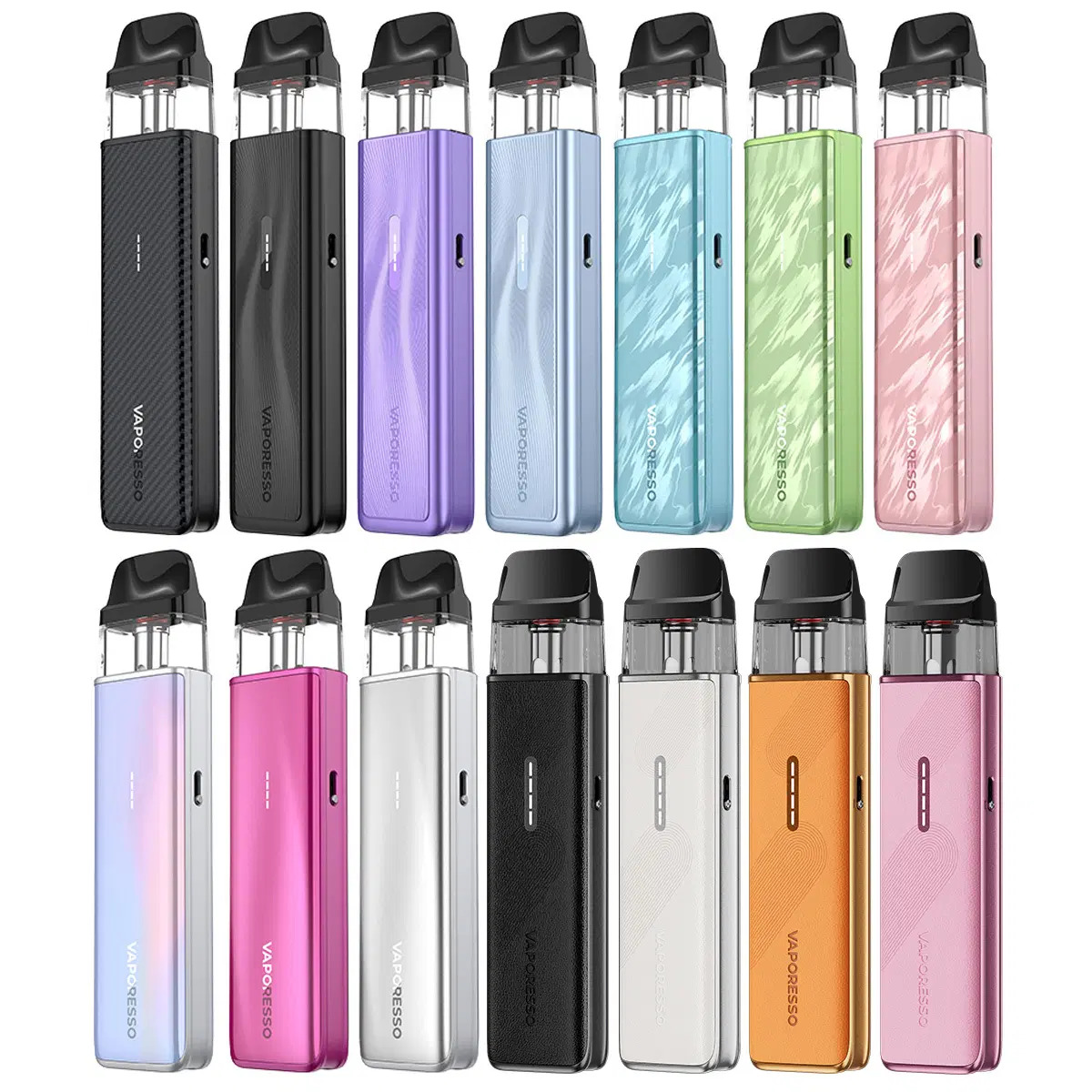
If your kit is more than two or three years old, the replacement will feel like a different category of product even at the same price point. USB-C charging has replaced micro-USB almost everywhere, and charge times are far shorter than they were. Mesh coils have replaced round-wire coils, with faster ramp-up and cleaner flavour. Pods have moved from fixed coils to plug-in coils on many models, so a pod stays in use for months instead of weeks. Adjustable airflow, a five-click lock, a puff cut-off, short-circuit and overheat protection and a battery readout are all standard rather than premium. Leak-resistant pod designs with top or side filling have largely fixed the bottom-fill leaks older kits were known for.
None of that means an old kit that still works needs replacing. It means that when one of the five signs above appears, the upgrade will be a step up rather than a like-for-like swap.
How long a kit lasts comes down mostly to habits. Use the USB-C cable supplied with the kit, plugged into a standard low-output USB plug or a computer port, and avoid fast-charge bricks, which can push more current than a small kit is designed for. Do not charge unattended overnight, and do not run it to zero before charging; lithium cells age fastest at the two extremes. Keep it out of hot cars and off radiators. Carry it in a pocket without keys and coins, which scratch the contacts and press the fire button. Wipe the contacts weekly, change coils before they burn rather than after, and use the 50/50 10ml liquids a pod coil is designed for rather than forcing thick shortfill through it. Our list of common vaping mistakes covers the rest.
A vape kit is electrical waste with a lithium battery inside. It must not go in the household bin: lithium cells crushed in a bin lorry or at a waste plant are a known fire cause, and the Waste Electrical and Electronic Equipment (WEEE) Regulations require them to be collected separately. Under those rules only large retailers must accept small electrical waste regardless of where it was bought; other shops must take back a like-for-like item when you buy a replacement, or point you to the distributor take-back scheme they belong to.
The same applies to empty prefilled pods and the batteries from big-puff kits. Keep a jar for them and drop the lot off together.
Free UK delivery over £15, 1.8 reward points on every £1 and 20,000+ five-star reviews. New here? Register at checkout for 10% off your first order.
There is no fixed schedule. Replace it when a charge no longer gets you through a working day, when it misfires, or when you can no longer buy its coils. Keep the receipt, because a kit that fails within its first few months is a warranty claim rather than an upgrade.
Fit a new coil or pod, prime it and clean the contacts. If the problem is gone, it was the consumable. If a fresh coil still tastes burnt, leaks or fires weakly, it is the device.
Not on a sealed internal-battery kit; opening it is unsafe and voids the warranty. Only mods with removable 18650 or 21700 cells let you swap the battery.
No. It contains a lithium battery and counts as electrical waste under UK WEEE rules. Take it to a council recycling centre, to a large retailer, which must accept small electricals whatever their source, or to the shop you buy a replacement from, which must take back like for like.
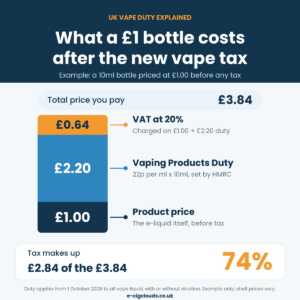
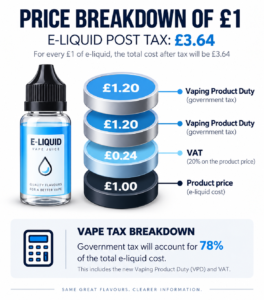
The duty from 1 October 2026 is on liquid, not hardware, so there is no tax reason to rush a kit purchase. There is a reason to pick an efficient kit, since every 10ml will cost more to replace.