

Every e-liquid on our shelves, from a 10ml bottle of 20mg salt to a Kingston 500ml, is built from the same short list of ingredients. Nicotine is an optional fourth. Take it out and you have a 0mg liquid, which is what a shortfill is before you add a nic shot. For a fuller breakdown of how the liquids, kits and coils fit together, our complete guide to e-cigarettes and e-liquids covers it end to end.
An e-liquid is heated to a vapour, not burnt. That is a description of the process, not a health verdict, and the two should not be confused.
The honest answer is that no UK health body describes any e-liquid as safe, and we won’t either. What they do say is specific and worth reading properly.
The NHS, on its Better Health vaping page, states that vaping is not completely harmless and that it is not yet known what the long-term effects may be. Nothing in that statement hinges on nicotine. The uncertainty is about breathing in heated PG, VG and flavouring over years, and that uncertainty is the same at 0mg as at 20mg.
Cancer Research UK states that “nicotine makes cigarettes addictive. But nicotine itself doesn’t cause cancer.” That matters for this question in an unexpected way: it means removing nicotine does not remove the ingredient most people assume is the problem. What it removes is the addictive component.
Cancer Research UK also says “there is no good evidence that vaping causes cancer” while making clear that “e-cigarettes are not risk-free, and we don’t yet know their long-term effects.” It also says plainly that “if you have never smoked, you shouldn’t use e-cigarettes.” That advice is not conditional on nicotine strength.
The MHRA, the UK medicines regulator, requires every nicotine-containing e-liquid to be notified with a full ingredient list before it can be sold, and the regulations prohibit whole categories of additive; MHRA guidance treats diacetyl, the flavouring associated with the “popcorn lung” scare, as unacceptable, so UK-notified nicotine liquids do not contain it. The catch for this article is that those rules apply to liquids that contain nicotine. A 0mg liquid falls under general product safety law instead, with no notification requirement. A manufacturer may make its 0mg liquids to the same recipes and standards as its nicotine versions, but that is the manufacturer’s choice rather than a legal guarantee, so it is worth checking what the label tells you.
| Consideration | With nicotine | 0mg |
|---|---|---|
| Addictive ingredient | Yes, nicotine | None |
| Inhaling heated PG, VG and flavouring | Yes | Yes, unchanged |
| Long-term evidence | Not yet known (NHS) | The same flavourings; long-term inhalation data is limited (CRUK) |
| Throat hit | Stronger, scales with mg | Softer; comes from PG only |
| Bottle size allowed | 10ml maximum | Any size, 50ml to 500ml common |
| Age of sale | 18+ by law | 18+ here; the Tobacco and Vapes Act 2026 extends the age-of-sale rules to nicotine-free vapes |
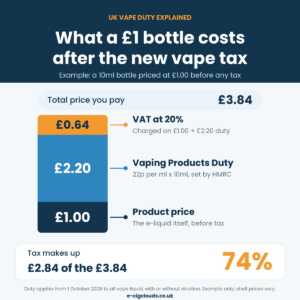
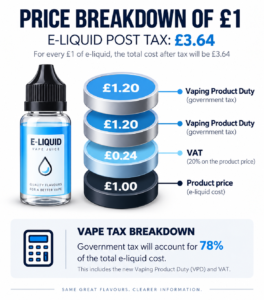
| Vaping Products Duty from 1 October 2026 | £2.20 per 10ml plus VAT | Same rate; duty applies to all vaping liquid |
One thing people are often surprised by: the new vape duty is charged on every millilitre of vaping liquid whether or not it contains nicotine, so 0mg shortfills are taxed too.
PG and VG are both approved for use in food and medicines, and that gets quoted a lot as if it settles the matter. It doesn’t, for a simple reason: approval for swallowing something is not the same as evidence about breathing it in as a heated aerosol many times a day, and that inhalation evidence is still being gathered.
Flavourings are the part of the mix with the least long-term inhalation data. For nicotine-containing liquids the UK rules go some way to addressing that by prohibiting categories of additive, and a 0mg bottle depends on the manufacturer applying the same standards. What the rules cannot do is tell you that a given flavour molecule is harmless over twenty years, because nobody has that data yet for most of them. Cancer Research UK’s line, that “vapes haven’t been around for long enough to be sure”, is the fairest summary available.
The honest framing is that 0mg removes the nicotine and leaves the other open questions where they were.
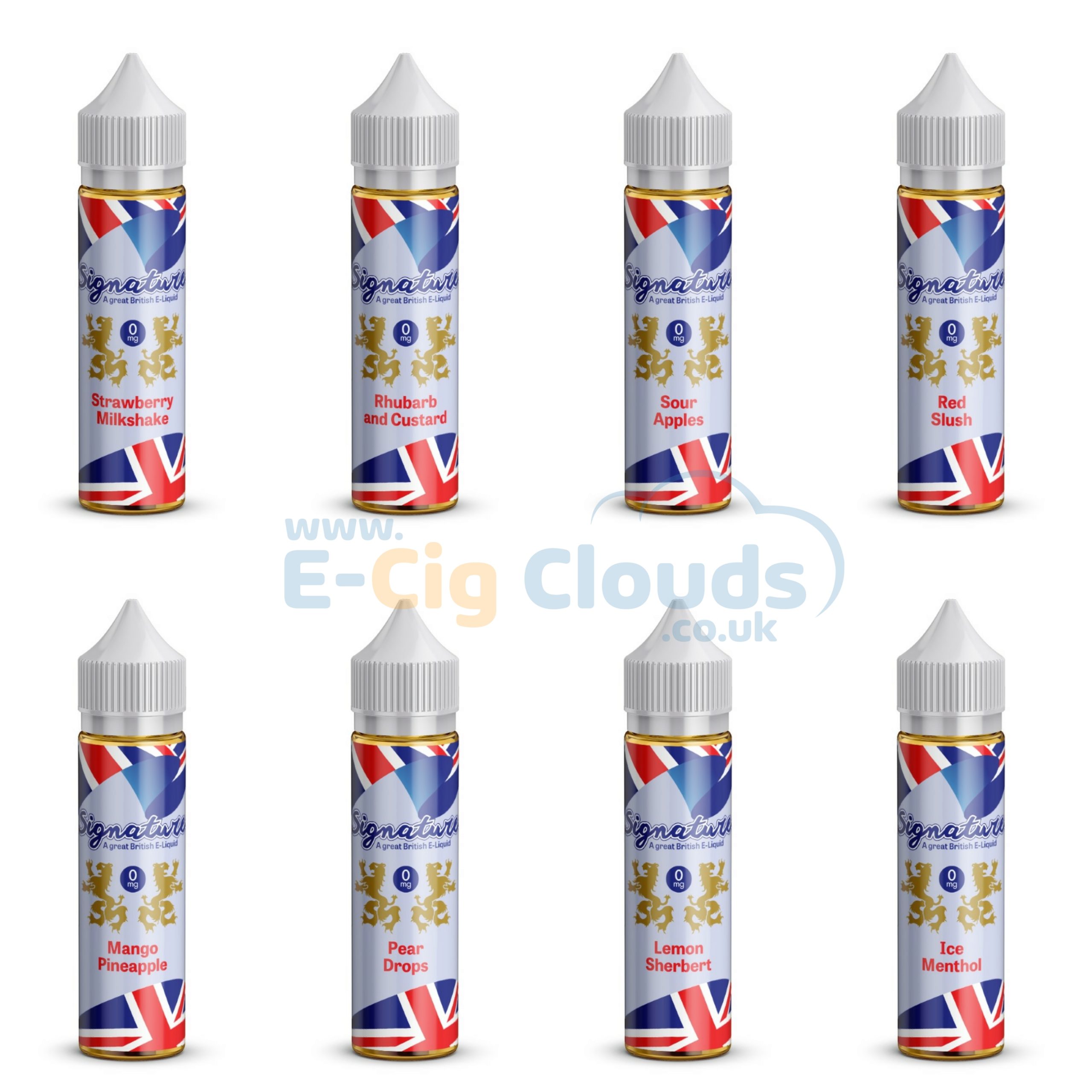
There are broadly four groups, and each has a different reason to read the section above carefully.
Vapers who want a 0mg version of a flavour they already use. Most brands sell the same recipe across their strengths, including 0mg. Our guide to how nicotine strengths are labelled explains what the numbers mean. Any decision to change or reduce nicotine intake is a clinical question, not a retail one.
Shortfill users mixing their own strength. Every 50ml or 100ml shortfill is a 0mg liquid until you add a nic shot. If you are choosing between formats, shortfill vs 10ml walks through it.
Flavour chasers on sub-ohm kits. High-power direct-to-lung vaping on a box mod gets through a lot of liquid quickly and is run at low strengths, with 0mg and 3mg the usual labels on shortfill-based mixes. See MTL vs DTL if you are not sure which side of that line you sit on.
People who have never smoked and are curious. This is the group both the NHS and Cancer Research UK are addressing when they say never-smokers should not vape. A 0mg liquid does not change that advice, and we would rather lose the sale than pretend otherwise.
These guides are information for adults who already vape. Our delivery and returns page (free UK delivery over £15) and rewards page (1.8 reward points on every £1) cover how the shop works.
No. A 0mg liquid removes nicotine; it does not remove the heated PG, VG and flavouring you inhale, and the long-term questions about those are the same at every strength.
It contains no nicotine, which is the addictive ingredient in e-liquid.
No. We do not sell any vaping product, including 0mg, to anyone under 18, and the Tobacco and Vapes Act 2026 extends the legal age-of-sale rules to nicotine-free vapes. We verify age on every order.
Yes. Vaping Products Duty from 1 October 2026 is £2.20 per 10ml plus VAT on all vaping liquid, with or without nicotine. Pre-duty stock can be sold until 31 March 2027.
Nicotine provides much of the throat hit, so 0mg feels softer. If it feels harsh instead, the usual cause is a worn coil or too much power for the liquid, not the liquid itself.
Yes, that is what shortfills are designed for: a 0mg bottle with space left for a 10ml nicotine shot. Once the shot goes in the liquid is no longer nicotine-free, so write the final strength on the bottle and store it with the same care as any nicotine liquid.