

Myth-busting articles are easy to write badly. It is tempting to swap one confident claim for another and call it a fact. We have tried not to do that. Every “fact” below is attributed in the sentence to the body that said it: the NHS, Cancer Research UK, Action on Smoking and Health (ASH), or the UK regulations themselves. Where those bodies say the evidence is still developing, we say so too. What you will not find here is a verdict on how vaping compares with smoking for your health; that is a question for your GP, a pharmacist or your local NHS stop smoking service, not for a retailer.
One framing point that Cancer Research UK makes and that applies to the whole article: “e-cigarettes are not risk-free, and we don’t yet know their long-term effects.” Debunking these myths does not make vaping harmless. It just makes the specific claim wrong.
This is the oldest one and it refuses to die. “Popcorn lung” is the nickname for bronchiolitis obliterans, a rare lung disease first identified in workers at a US popcorn factory who had inhaled large amounts of diacetyl, a buttery flavouring, over long periods.
What Cancer Research UK says: it has published a fact check on the subject, titled “The myth of e-cigarettes and popcorn lung”, which treats the claim as exactly that. Its main vaping page also says “there is no good evidence that vaping causes cancer”, with the long-term caveat quoted above.
What the law says: the Tobacco and Related Products Regulations 2016 prohibit whole categories of additive in nicotine-containing e-liquids, and MHRA guidance treats diacetyl as unacceptable, so UK-notified nicotine liquids do not contain it. Every nicotine-containing liquid must also be notified to the MHRA with a full ingredient list before sale.
Where the evidence is developing: the rules and the fact check cover diacetyl. They do not tell you that every flavouring is harmless when inhaled for decades, and neither the NHS nor CRUK claim that. The honest version of this fact is “the specific popcorn lung claim is wrong in the UK”, not “flavourings are fine”.
There have been genuine incidents, and a small number were serious. But the pattern behind them is consistent and it is not “vapes are bombs”. It is lithium battery misuse, which is the same failure mode as an e-bike, a phone or a laptop.
If you use a box mod with removable cells, the rules are simple and non-negotiable: buy cells from a reputable supplier, replace a torn wrap immediately, carry spares in a plastic case, and charge with the supplied cable or a dedicated external charger. Our list of common vaping mistakes covers charging habits, and if your device is behaving oddly our common vape problems article will help you rule out the harmless causes first.
Verdict: not a myth that vapes have caught fire, but a built-in-battery kit charged with its own cable on a low-output plug is a very different proposition from a loose cell in a pocket.
Second-hand smoke and second-hand vapour get lumped together in conversation, but the body with a published position on what vaping does to the people around you is the NHS, and its wording is worth reading closely.
What the NHS says: “there is no evidence so far that vaping is harmful to people around you and any risks are likely to be low.”
Where the evidence is developing: read that sentence carefully. “No evidence so far” and “likely to be low” are not the same as “proven harmless”, and the NHS chose its words deliberately. In practice, that means the courteous thing is also the sensible thing: don’t vape around children, pregnant women or people who have asked you not to, and don’t assume that because your vapour disappears it is welcome. Most workplaces, pubs and transport operators ban vaping indoors anyway.
Verdict: the “same as smoke” claim is wrong on the evidence available. “Completely harmless to bystanders” is a claim nobody reputable makes either.
The bright packaging of the old disposable era made this an easy claim, and youth vaping is a genuine policy concern that the disposable ban was partly designed to address. But “vaping is a kids’ thing” is not what the adult usage data shows.
What the law says: it is illegal to sell nicotine vaping products to under-18s, and illegal for an adult to buy them on their behalf. We do not sell any vaping product, including 0mg, to anyone under 18, and the Tobacco and Vapes Act 2026 extends the legal age-of-sale rules to nicotine-free vapes. Every order on this site is age-verified.
What ASH says: the 2026 Smokefree GB survey by Action on Smoking and Health found that 10% of adults in Great Britain aged 18 and over vape, an estimated 5.5 million people. Of those, 60% are ex-smokers, 32% are current smokers and 8% have never smoked.
What the NHS says: “Children and non-smokers should never vape.” We agree.
Verdict: vaping is an adult market, overwhelmingly made up of people with a smoking history. The concern about young people is real, but it is an argument for enforcement of the age limit, not evidence that the product is aimed at them.
For a few years the single-use disposable was the most visible vape in the country, so it is understandable that many people think “vape” means a plastic stick you throw away. That product no longer exists legally in the UK.
What the law says: the sale of single-use disposable vapes has been banned across the UK since 1 June 2025. A device sold today must be both rechargeable and refillable or re-poddable. Our UK vape law guide has the full picture, including the 10ml and 20mg/ml limits on nicotine liquid and the 2ml limit on pods.
| What replaced it | How it works | Who it suits |
|---|---|---|
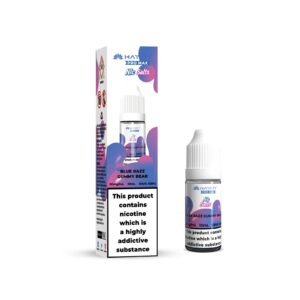
| Prefilled pod kits | Rechargeable battery, click-in 2ml prefilled pods from brands like Lost Mary and Hayati | Ex-disposable users who want zero maintenance |
| Big-puff kits | Rechargeable, high puff counts, replaceable prefilled pods, often with a screen | Heavier users who want the disposable feel with a longer life |
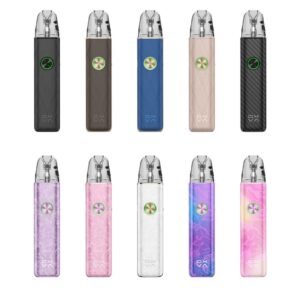
| Refillable pod kits | Fill your own 2ml pod with any nic salt or 10ml liquid | Anyone who wants flavour choice and the lowest running cost |
| Starter kits and mods | Tank-based, adjustable power, shortfill-friendly | Experienced vapers and direct-to-lung users |
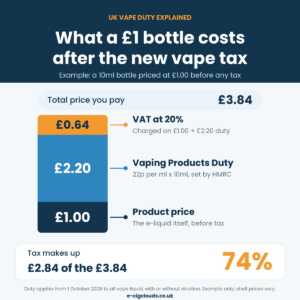
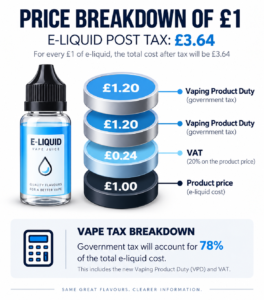
If you are choosing between the first two, our prefilled pod kit buying guide and Lost Mary vs Hayati are the two to read next. The Vaping Products Duty arriving on 1 October 2026 is charged at the same rate per millilitre of liquid on every format, nicotine or not.
It doesn’t. Every shortfill on the site is 0mg until you add a nic shot, and most 10ml ranges include a 0mg option.
What Cancer Research UK says about nicotine: “nicotine makes cigarettes addictive. But nicotine itself doesn’t cause cancer.” It is the addictive ingredient.
Where the evidence is developing: taking the nicotine out does not make an e-liquid “safe”. You are still inhaling heated PG, VG and flavouring, and the open questions about those apply at 0mg as much as at 20mg. We cover that properly in are nicotine-free e-liquids safe, and if you are choosing strengths, how much nicotine should I vape explains the ladder.
This one gets asserted as if it were settled. It isn’t, in either direction, and the two bodies with the most reason to be cautious are careful in how they put it.
What Cancer Research UK says: “there is no good evidence that vaping causes cancer.” In the same breath: “we don’t know yet about the long-term effects of vaping. Vapes haven’t been around for long enough to be sure.” And for anyone who has never smoked: “if you have never smoked, you shouldn’t use e-cigarettes.”
Verdict: “vaping causes cancer” is a claim without good evidence behind it. “Vaping has been proven not to cause cancer” is also a claim without good evidence behind it, because the products are too new. Anyone who tells you either with certainty is guessing. If cancer risk is the thing worrying you, that is a conversation for your GP.
Free UK delivery over £15, 1.8 reward points on every £1 and 20,000+ five-star reviews.
The Tobacco and Related Products Regulations 2016 prohibit categories of additive rather than naming diacetyl, but MHRA guidance treats diacetyl as unacceptable, so UK-notified nicotine liquids do not contain it.
Not legally. Single-use vapes have been banned since 1 June 2025. Anyone still selling them is breaking the law, and the product has not been through any UK compliance route. Prefilled pod kits are the direct replacement.
Myth 3 above sets out the NHS wording. We would not vape around children, and keep liquids and devices out of reach; our post on what happens if you swallow e-liquid covers storage.
See Myth 2 above for the situations behind the incidents on record. Charge with the supplied USB-C cable on a low-output plug or a computer port, avoid fast-charge bricks, and never leave a device charging unattended overnight.
Cancer Research UK states that nicotine makes cigarettes addictive but that nicotine itself does not cause cancer. Addiction is a different problem from cancer, not no problem.
Your GP, a pharmacist or your local NHS stop smoking service. Vaping products sold here are consumer goods, not licensed medicines, and we are not the right people to answer medical questions.