
It sounds obvious, but the reason matters because it’s what you’ll lean on at 11pm on a Friday when someone offers you a cigarette. Write your reasons down somewhere you’ll see them every day. Not a general “it’s bad for me”, but the specific things: the cost of twenty a day over a year, being able to run for a bus, not smelling of smoke around your kids, the family history you’d rather not repeat.
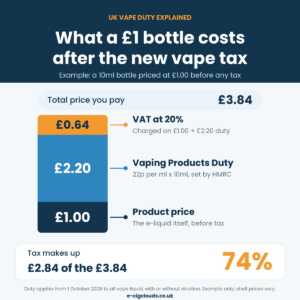
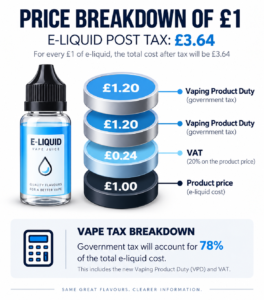
The NHS Better Health website has a savings calculator that turns your daily habit into a yearly figure. For most people that number alone is a good enough reason to stick a note on the fridge. If money is the driver, remember that nicotine products carry their own costs too, so compare options on a like-for-like basis.
Pick a date within the next two weeks. That’s the window NHS stop smoking advisers generally work to: long enough to get any nicotine replacement or prescription sorted and to clear the house of lighters and ashtrays, short enough that the decision stays fresh. Avoid a date that lands on a known stress point like a work deadline or a wedding.
Put it in your calendar and tell at least one person. The NHS says you are more likely to succeed with support than going it alone, which is why its stop smoking services pair you with an adviser for weekly check-ins over the first few weeks. You can find your local service through the NHS Better Health site or ask at any pharmacy.
Once the date arrives, count the days. A paper calendar with a cross on every smoke-free day is old fashioned and it works. There’s also the free NHS Quit Smoking app, which tracks days, money saved and cravings beaten.
Nicotine is one half of a smoking habit. The other half is the routine. Before your quit date, spend two or three days noting every cigarette: what time, where, what you were doing and how you felt. Most people find their smoking clusters around a handful of repeat situations.
Write each trigger next to its replacement. The point isn’t to never feel the urge, it’s to know in advance what you’ll do when you do.
There are several routes and the NHS is clear that combining a nicotine product or medicine with behavioural support gives people the best chance. None of what follows is medical advice. It’s a plain description of what exists so you can have an informed conversation with a professional.
| Option | What it is | Where you get it | Regulated as |
|---|---|---|---|
| NHS stop smoking service | Weekly support from a trained adviser, usually with NRT or medicine supplied | Free via NHS Better Health, your GP or a pharmacy | NHS service |
| Nicotine replacement therapy (NRT) | Patches, gum, lozenges, nasal or mouth spray, inhalator | Pharmacy, supermarket, or on prescription | Licensed medicine (MHRA) |
| Prescription medicines | Tablets such as varenicline or cytisine that act on nicotine receptors | GP or stop smoking service only | Prescription-only medicine |
| Nicotine vape | Rechargeable device that heats nicotine e-liquid into an aerosol. The NHS describes it on its Better Health quit smoking pages | Vape retailers; some local stop smoking services in England through the government’s Swap to Stop scheme | Consumer product (TRPR 2016), see our UK vape law guide |
| Going without nicotine | Stopping outright with behavioural support only | NHS app, helpline, adviser | Not applicable |
Nicotine replacement therapy. The NHS describes NRT as a way of getting nicotine without the other harmful chemicals in tobacco smoke, and notes it is available in several forms and that many people use two at once, for example a patch for background nicotine and gum or spray for sudden cravings. A pharmacist can advise on strength and combinations. NRT is a licensed medicine, so it has been through clinical trials and is supplied with dosing instructions.
Prescription medicines. Varenicline returned to NHS availability in 2024, and cytisine became available on prescription in the UK from January 2024. Both are tablets that act on the brain’s nicotine receptors and both need a prescription and a conversation about your medical history.
Nicotine vapes. The NHS describes nicotine vapes on its Better Health pages as an option for adult smokers, while stating that vaping is not risk-free and is not for non-smokers or anyone under 18. Retail vapes aren’t prescribed, don’t come with a dosing schedule and don’t carry a licence for cessation. For background reading, we have separate posts on how nicotine strengths are labelled and on what the published evidence says about nicotine.
Nicotine pouches. These are tobacco-free pouches held under the lip. They sit outside the TRPR e-liquid rules and have no statutory nicotine cap today, although the Tobacco and Vapes Act 2026 gives ministers the power to set one. Our post on vaping versus nicotine pouches describes the two formats without recommending either.
Licensed medicines come with a patient information leaflet, and your pharmacist or adviser will explain the dose. Consumer nicotine products do not, so the law does some of the work instead. In the UK, nicotine e-liquid is capped at 20mg/ml and sold in bottles of up to 10ml, pods and tanks hold a maximum of 2ml, every nicotine-containing product must be notified to the MHRA before sale, and single-use disposable vapes have been banned since 1 June 2025. We do not sell any vaping product, including 0mg, to anyone under 18, and the Tobacco and Vapes Act 2026 extends the legal age-of-sale rules to nicotine-free vapes. The full picture is in our UK vape law and regulations guide.
Two safety points apply to every household with nicotine in it. Keep every product, including patches, gum, pouches and e-liquid, out of reach of children and pets. And if anyone swallows e-liquid, follow the steps in our post on what to do if e-liquid is swallowed, which starts with calling NHS 111 or 999.
The NHS says withdrawal is at its worst in the first few days and that most physical symptoms ease within two to four weeks. The NHS lists irritability, restlessness, difficulty concentrating and increased appetite among the common symptoms, and says they pass. The tactics below are the ones the NHS Better Health pages suggest for getting through a craving.
Fill the gaps with something new: the gym, running, cooking, a game, an instrument. It doesn’t matter what, as long as it happens at the times you used to smoke.
The NHS says a course of NRT typically runs for 8 to 12 weeks, with the dose reducing through the course, and that the patient information leaflet and your pharmacist set the schedule. Prescription medicines come with their own course length set by the prescriber.
Nicotine vapes and pouches have no licensed schedule attached, and we don’t publish one, because how and when to reduce nicotine is a clinical judgement, not a retail one. UK nicotine strengths run from 20mg/ml, the legal maximum, down to nicotine-free, and our nicotine strength guide explains what the labels mean so that conversation is easier. Our post on nicotine-free e-liquid explains how 0mg products are regulated and what they do and don’t contain.
The NHS says a slip does not mean the attempt has failed, and advises treating it as information: what was the trigger, what could you have done instead, and what will you do next time? Then carry on.
If you’re finding it much harder than expected, that’s exactly the moment to book in with a local stop smoking service rather than pushing on alone. The advisers have heard it all, and you can combine the service with whatever product you’re already using. Our post on vaping myths and facts sets out what the named public bodies say, with sources.
These guides are written for adult vapers, not as quit advice. Our delivery and returns page and rewards page cover how the shop works.
Yes. Local services are funded by the NHS and councils. You can self-refer through NHS Better Health, or ask your GP or pharmacist. NRT supplied through the service is free or at prescription cost depending on where you live.
Don’t combine products without asking. A pharmacist can look at your overall nicotine intake across everything you use.
The NHS says physical symptoms peak in the first few days and mostly settle within two to four weeks. The habit-based urges tied to routine can last longer, which is why trigger mapping matters.
No. In the UK there is currently no vape licensed as a medicine. NRT and prescription tablets are the licensed options.
Ask your dentist. Our post on vaping and dental health summarises what published dental reviews have reported, and the honest answer is that the evidence is still developing.
Speak to your midwife or GP. The NHS has dedicated stop smoking support for pregnancy and can advise on which products, if any, are appropriate. Please don’t rely on a retailer’s blog for that decision.
2 thoughts on “How to stop smoking: a practical quit plan you can start this week”
is vaping actually better for you than smoking though?
Thanks for your question!
The belief that vaping is better for you than smoking is supported by several factors:
1.Reduced Harmful Chemicals: Traditional cigarettes contain thousands of harmful chemicals, including tar and carcinogens, which are produced by burning tobacco. E-cigarettes, on the other hand, vaporise a liquid that typically contains nicotine, propylene glycol (PG), vegetable glycerin (VG), and flavourings, with significantly fewer harmful substances. Studies have found that vaping exposes users to fewer toxicants compared to smoking.
2.Lower Levels of Carcinogens: Research indicates that the levels of carcinogens and toxic substances in e-cigarette vapour are much lower than those in cigarette smoke. For example, studies have found that e-cigarette vapour contains lower levels of formaldehyde and other harmful chemicals.
3.Public Health Guidance: Some health organisations, including Public Health England and the Royal College of Physicians, have stated that e-cigarettes are likely to be significantly less harmful than smoking combustible cigarettes. They acknowledge that while vaping is not risk-free, it is a less harmful alternative.
4.Clinical Studies and Observational Data: Evidence from clinical studies and real-world observations suggests that switching from smoking to vaping can lead to improvements in health markers, such as lung function and reduced levels of toxic substances in the body.
5.Long-Term Data: Since vaping is a relatively new phenomenon, long-term data is still limited. However, the existing evidence supports the notion that vaping is less harmful than smoking. Ongoing research is essential to better understand the long-term effects of vaping.
While vaping is generally considered less harmful than smoking, it’s not without risks, particularly regarding nicotine addiction and potential impacts on respiratory health. The best option for health is to quit all forms of nicotine and tobacco use.