

Both types use resistance metal to heat e-liquid held in organic cotton. The difference is the shape of the metal, and that shape changes how heat reaches the liquid. If you want the underlying science first, read how vape coils work.
| Regular wire coil | Mesh coil | |
|---|---|---|
| Heating element | Round wire wound into a spiral | Flat metal strip with a fine grid of holes |
| Contact with cotton | Along the line of the wire | Across a whole surface |
| Ramp-up | Slightly slower | Near instant |
| Heat spread | Hotter at the wire, cooler between turns | Even, with fewer hot spots |
| Flavour | Clean and crisp, a touch lighter | Fuller and rounder |
| Vapour | Lighter, warmer | Denser at the same wattage |
| Liquid use | A little slower | A little faster |
| Best for | Tight MTL draws, plain flavours, making liquid last | Flavour, restricted DTL and sub-ohm vaping |
A regular coil is resistance wire, usually kanthal, stainless steel or nichrome, wound around a rod into a neat spiral, then threaded with cotton and fitted into a metal housing. It’s the design vaping started with and it’s still everywhere, because it’s simple, cheap to make and very consistent.
Within “regular” there are variations. A single coil is one spiral. A dual coil runs two spirals side by side, which spreads the heat across more cotton and suits a slightly looser draw. Twisted and Clapton wires, where a thin wire is wrapped around a thicker core, add surface area and are mostly found in rebuildable and high-power tanks rather than pod kits. Coils like the Innokin Prism T18e coils are the classic wound design found in mouth-to-lung tanks.
Because heat is concentrated along the wire, a regular coil has hotter and cooler zones. At low power in a tight MTL coil that’s no problem at all, and many vapers prefer the slightly crisper, lighter taste it gives to tobacco and menthol flavours.
Wire coils also have a practical edge for anyone who vapes all day. Because they vaporise a little less liquid per puff, a pod or tank lasts longer between refills, and the slightly warmer, lighter vapour is easy to take in the short, tight draws most pod kits are built for. If you mostly vape a single plain flavour and you are happy with the draw you already have, there is no reason to change. Regular wire is not the old-fashioned choice; it is simply the right tool for a tight MTL vape.
A mesh coil replaces the wire spiral with a thin sheet of metal punched or etched into a grid, rolled into a tube or laid flat, with the cotton pressed against it. The grid gives a far larger surface area for the same length of metal, and every part of that surface is in contact with wet cotton.
Two things follow. First, the strip heats almost instantly and evenly, so there’s no lag on the first second of a puff. Second, more liquid is vaporised at once, which is where the fuller flavour and thicker vapour come from. Mesh is now common in pod kits, including pods with the coil built in, such as the Vaporesso Luxe Q Mesh pods, where you replace the whole pod rather than a coil.
For tanks, mesh heads like the Aspire Nautilus Mesh coils and the Aspire Nautilus 2S Mesh 0.7 Ohm coils bring the same design to MTL and restricted-DTL tanks.
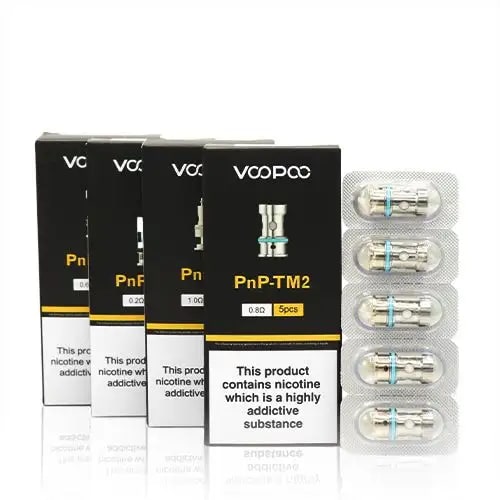
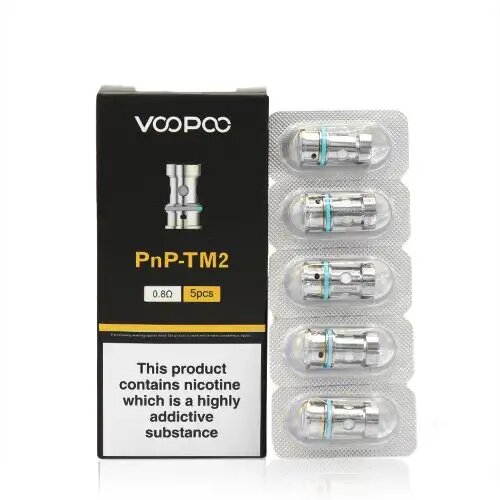
The fairest comparison is between coils in the same range at the same resistance. The published ratings for Voopoo PnP coils and Uwell Caliburn G and G2 coils show that the wattage is set by resistance, while the element type changes the draw.
| Coil | Element | Resistance | Rated power | Draw |
|---|---|---|---|---|
| PnP-R1 | Dual wire | 0.8 ohm | 12W to 18W | MTL |
| PnP-TM2 | Mesh | 0.8 ohm | 12W to 18W | Half DTL |
| PnP-M2 | Single wire | 0.6 ohm | 20W to 28W | DTL |
| PnP-VM4 | Mesh | 0.6 ohm | 20W to 28W | Half DTL |
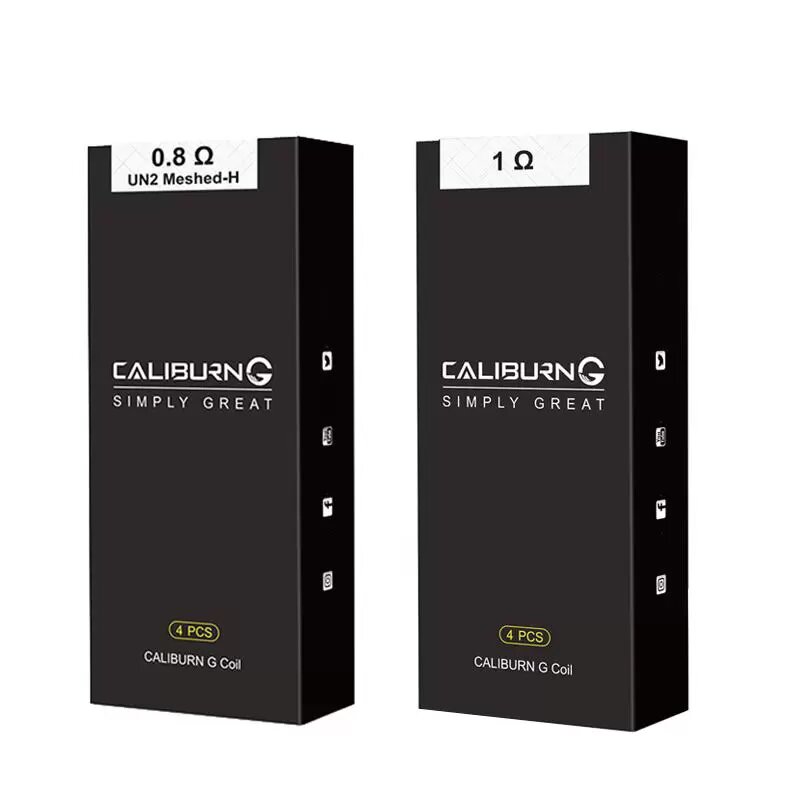
| Caliburn G 1.0 | Standard wire | 1.0 ohm | Set by kit | MTL |
| Caliburn G 0.8 / 1.2 | Mesh | 0.8 or 1.2 ohm | Set by kit | Restricted DTL |
Notice that a 0.8 ohm dual wire coil and a 0.8 ohm mesh coil want exactly the same power. The mesh version isn’t hungrier; it just turns that power into flavour and vapour differently, and Voopoo rates it for a slightly looser draw. The product listing describes the Caliburn G mesh coils as delivering a restricted DTL inhale and the standard 1.0 ohm coil as a long-lasting MTL vape, and recommends 50/50 or higher-PG liquids for all three.
E-liquid. Match the liquid to the resistance, not the element. 50/50 suits MTL coils of 0.6 ohm and above (typically 0.6 to 1.2 ohm); high-VG 70/30 suits coils below about 0.6 ohm. A 1.2 ohm mesh pod coil still wants a 50/50 nic salt or 10ml liquid, and a 0.3 ohm mesh tank coil still wants a thicker shortfill. Our PG/VG ratio guide goes deeper.
Liquid use. Because mesh vaporises more liquid per puff, a mesh coil will usually empty a pod a little faster than a wire coil at the same wattage. If you get through a lot of liquid already, bear that in mind, and our guide to the new vape duty explains how liquid costs work from 1 October 2026.
Battery. On a regulated kit the battery delivers the wattage you set or the kit sets, so at the same resistance and wattage a mesh coil uses no more battery than a wire one.
Coil life. Even heating means fewer hot spots scorching the cotton, so many vapers find mesh coils hold their flavour for longer. But the things that really decide coil life, sweet liquids, power above the rated range and dry puffs, affect both types equally. A pod or tank coil of either kind is typically changed every one to three weeks. Our guide to why coils burn out fast covers what shortens it, and when to change your pod or coil lists the signs it’s finished.
The honest answer is that it’s worth trying both if your pod or tank allows it. Coil packs are cheap next to a kit, and the only way to know whether you prefer the crisp taste of wire or the fuller taste of mesh is to vape each for a few days. Start at the low end of the rated wattage and work up. If your draw feels too tight or too loose after the swap, adjust the airflow; our guide to MTL vs DTL vaping helps. And if a new mesh coil pops and crackles more than your old wire one, that’s usually normal; see our guide to crackling sounds while vaping. A harsh, burnt hit isn’t normal on either type, and why your vape tastes burnt shows how to fix it.
Free UK delivery over £15, 1.8 reward points on every £1 and 20,000+ five-star reviews. New here? Register at checkout for 10% off your first order.
Many vapers find them better for flavour and vapour. Regular wire gives a tighter, crisper MTL draw and uses liquid a little more slowly, so neither is better for everyone.
Not at the same resistance. Voopoo rates its 0.8 ohm mesh and 0.8 ohm dual wire PnP coils at the same 12W to 18W. Resistance, not element type, sets the wattage.
Only if the coil range made for your tank or pod includes a mesh version. Coils aren’t interchangeable between ranges, so check the compatibility list on the coil’s product page.
Usually a little, because they vaporise more liquid per puff. If you want the pod to last longer, a wire coil or a lower wattage helps.
Even heating means fewer hot spots, so they often hold flavour well. Sweet liquids and high power shorten the life of both types, and both are typically changed every one to three weeks.